"Your prince's crown
Cracks and falls down
Your castle hollow and cold
You've wandered so far
From the person you are [...]"
Keane.
Traveling just doesn't happen in physical space, whether past, present or future. It takes place, first and foremost, in our mind. It can be boiled down to how we configure our desires, pilot our plans and even execute our dreams. We have to crunch numbers beyond kilometers, days, currencies and probabilities to produce a valid output.
Missed representations
Sure, there might be people who can pick up a bag at the drop of their hats and stream their lives away from any predicated guess. These are the wanderers, the adventurers, the criminals, the anti-socials who serve as counter examples to the orderly ways of the society. Do they meet a happy ending or a tragic fate in the end? It would be hard to account for, because they set themselves up with unknown parameters from the start.
The appeal of travel is already very mysterious in itself: it's like evolution is giving continuous prompts for you to get up to speed, on your feet, into the wilderness. The challenge is always terrifying and the variables impress with their randomness. Certainly, it would pay to prepare and to validate different algorithms for potential threats. What to do if it rains? Where to sleep if no money? How to call if no network? When to leave if romantically entangled?
Endlessly scalable
So, the human brain can compute anything and everything, real or imagined, relaxing or threatening. You can decide which path to walk at any crossroad, but you can only do so when you have envisioned what is likely to happen in a set environment. In the comfort of our familiar surroundings, this process has compiled conditioned reactions that are so predictable that they lack refinement. I know how to navigate my town to reach my home, even if the world is to end.
This is why, to sharpen our downtrodden instincts, we need to update our database in a new setting. It is testing and trialing: sometimes with major errors, often with common bugs. But the reward comes from the experience itself: going up, and down, sideways, straight or backwards; there is perpetual movement. Traveling is a deliberate surveying and mapping of the pathways towards the origin of our consciousness.
"Might last a day, yeah
Mine is forever"
Courtney Love.
We often think we are living unique moments and experiencing special events when we are at the peak of positive emotional reactions. It might be something we waited for so long to happen, or a situation we had been planning for years, months, days that suddenly comes to life. We are exhilaratingly taken by the instant, as we realise how much of our past selves we had dedicated to this present moment.
Where was my mind?
So where does the heightened sense of accomplishment comes from? Is it because of the time that was spent in waiting? Could it be because we did not quite believe things would unfold for our own benefit? Or was it that there were so many hidden variables to compute into this single output? Regardless, there is always the feeling of potential risk or loss in the gambling wheel of life. What we predict is often what we hope for, rather than what we really picture in our mind.

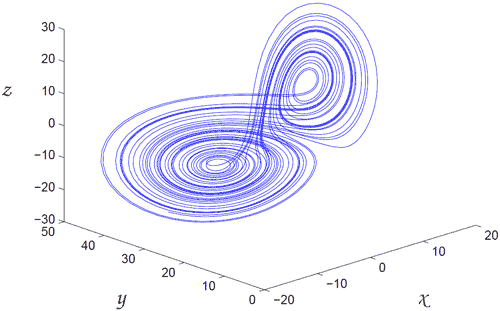
And it is true that in our head, there is a constant chaotic whirlpool of emotions, thoughts, feelings, beliefs, ideas, memories, plans and perceptions. At one end, we can choose to relentlessly isolate some of its elements, but on the other end, we could go by total abandonment, allowing ourselves to get sucked into the traumatic drama. This is what we do when we are in the blues, waiting for the internal tempest to uncover a new way to make sense of the world. Depression indicates the limits of our mind in dealing with its own confusion.
Probably a maybe
So what gets us back on track? Nothing more but a game of probabilities: the lure of navigating the chessboard and turning ourselves from pawns to knights to queens. It is nothing more but mathematics applied to real-time digits and figures, though we all want to bet on the road that is the shortest to the King's castle. In this mental race, we wrongly believe we alone can see the way forward for ourselves. We ignore training and pattern recognition. We forget our mind is just a machine eager to learn...to death.
As a result, we have to dabble about in probabilisms most of the time: maybe we are going for the best, maybe we are staying for the better, the results can only be known after we have gone through all of this. And this is precisely what makes us feel stuck: changes are embedded in our lives and so are our attempts to override them. Who can say they have always had triumphs, without ever experiencing defeats? Only those who run away from themselves can afford such consequential lies and deceptions...
"You are my sweetest downfall
I loved you first, I loved you first..."
Regina Spektor
Why are some moments more memorable than others? What makes someone special? When is it that wandering in space becomes aloofness? Who decides that I am, indeed, a unique individual? There is something mind-boggling about facing these interrogations inside out and wrestling with whatever conclusions are derived from them. When you are used to walking steadily along a familiar road, it can come as a revelation to explore what makes you yourself.
Chaos in osmosis
So, we have our instances of being tempted by the rabbit hole, often for the sake of seeing something new or uncovering well-hidden secrets...and possible treasures. We look for opportunities to slip away from reality and jump into the fantastic. It can be a house that we believe is inhabited by a ghost, or a twist in our chest that tells us that the person in front of us is "the one". At times, we are convinced to have received a mission from above to do what we do. We go through the experience and end up self-aggrandised and relieved, somehow, that our identity is once again preserved from the rub of others.
But we can't prove any of this. There is no formula to extract from our reflections, no theorem to conceptualise our findings. We can check with peers whether what we are saying makes sense and review it all in therapy, yet it remains immaterial. How can it be real, when it can't be seen, touched, smelt, heard nor tasted? Even worst, how can I be sure that what happened only ever happened to me and me only? There definitely is no guarantee in the uniqueness of my escape: there might be countless of others who have swirled into the same black hole and shut themselves from the scrutiny of the outside world meanwhile.
Quizzing the unique
The fact is, experimenting with ourselves might initially appear like the most singular thing to do, because it's the raging impulse to KNOW that pushes us past the horizon's line. The path is infinitely uncertain and we are on a quest to make sense of the probabilities ahead: it's a question of cataloguing the world around us and building up our own internal framework. As we walkabout, we trace our past, dot our present and sketch our future in quick strokes, since time is always running away when space closes upon us.
In the end, each pathway becomes uniquely integrated in knitting our world line. The thread was stamped by us and for us, and no one else. This unique footprint is the essence of our existence, simply because although we might have crossed and followed others along the way, we always succumb to our own wanderlust. This is also what helps us shape a universe of our own aside other multiverses. We are all on our own planets, insulated from time to time, colliding at other hours. And the memories and experiences we have are merely what remains after our precious biosphere has been thoroughly annihilated.
"The negativity is ruining your sleep
It makes you wanna cry on your pillow."
The Futureheads.
Dilluted away
 Space-shifting takes a lot of guts and forward thinking. Visualising new surroundings, preempting lurking dangers, calibrating possibles actions, testing various paths, etc. It is all part of the excitement. But with a lot of zooming in and out comes a very diffuse dizziness. What was I pursuing again? Where did I start from? When am I going to land? Which way am I facing as now? How do I make the jump to the next stage? Confusion is always round the corner.
And it does make sense that puzzlement should occur. The more we switch space, the less conscious we become of time passed. Both dimensions are tightly linked, but not in the way we often think. Racing against the clock might give us the impression that we have accomplished a lot in a short interval, when in reality we haven't really moved out of our shells. Similarly, as we roam about the world, we get the sense that we have transformed into a new being, yet we would have a hard time remembering what we were like before. When we stretch in one direction, we pull in in the other. Less memory when space-shifting, less change when time-traveling.
Stay put
Then, what about immobilism? Standing still, witnessing evolution in people and relationships, tracking updates in places and traditions, becoming an observer to other people's live, shouldn't it provide a stronger sense of self and integration as opposed to the graceful degradation surrounding us? Isn't looking out another way of peering in? After all, what we perceive and do in the outside world often is the result of what we think and feel in the depth of our minds.
But that would be forgetting one essential component of our lives: confusion. When there are no set truths and no universally established systems, nothing comes more naturally than doubt. There is no guarantee that what I see really is what is. There is no certainty that what I think is purely objective. There still is randomness, ambiguity, duality, exclusion, interpretation in and outside me. So I can never say for sure that my observations and conclusions are right/correct/accurate. I cannot vouch for sure that my thoughts are truly and exclusively mine. There always is doubt.
Blacking out
So, instead of applying force, triggering friction, asserting pressure, welcoming doubt might be a more productive operation. If I can't stand without sinking, it might be preferable to lay down and float. Sure, the currents and the streams will inevitably spin me around and make me lose my internal compass after a while, but with low resistance also come the benefits of a weakened impact. Just like a sponge seek to soak and absorb all the water in the oceans, I am willing to let life pass through me at all time and all space.
"Music is the safest form of time travel..." Fully Filmi.
 History is what is left when everything has been lived, done and sits dusting. There are always stories to be told and written, but the number of pages will vary. And so will the time frame. When we tell stories, we relive them, but we also recreate and revive them, for a brief moment. But they are not real, they merely exist to entertain ourselves and tickle our memories.
Know where you're coming from
When some particular stories get adopted by a community or a nation, they all converge to a cultural pantheon. People who fought for the land, who thought for progress, who planned for systems, who created for pleasure, and did so on a grand scale, they almost always become "heroes and heroines" for the locals. They are remembered, worshiped, praised and venerated for their genius and their contributions. At least, that is what books and bank holidays want us to believe.
There is something coercive about having to pay respect to a time forsaken well before our existence. When we commemorate, do we actually remember or do we blindly pretend to? Isn't it nothing else but vacuous customs designed to arrest time for a little while? We certainly would remember none of these "special" events if they didn't figure in our annual calendar.
So, remembrance doesn't have to be an institutionalised procedure. Most of the time, it is an individual experience of time travel that happens at any moment and any time, but is always triggered by a familiarly unfamiliar object. It can be that dining set you received at Christmas, the silver handcuffs you got for your birthday, the photograph of your first car, someone's face or name, etc. When our memories have been confined for so long in our mind that they are almost gone to oblivion, there comes the time to rewind.
Erase and remind
Of all the possible anchors for the rocking boat of our memories, music is the soundest. It carries forward sensations, emotions, recollections and reflections that have been preserved in our subconscious. Music mixes the most intimate moments we have lived and burns them on the inner layers of our mind so that they can be replayed at a later time. No words are needed, no ambiguity will interfere when nostalgia strikes through a few notes, a song or a prerecorded instrumental.
This is why we need artists, musicians, performers and other rocknrollas. The intensity of their art often tramples their own stories and individualities. Their talent is the real force that pushes the boundaries of life experiences and breaks down the confines of mortality. What we read in books are elaborate scripts written by erudites to impress our minds. What we really want is the power to explore our impressions without restriction.
Indeed, music gives us the freedom to relive and release our personal stories to the point where a singularity of events becomes the plurality of shared memories.
"Yesterday is just a thought away." Shingai Shoniwa (The Noisettes).
When do we get the green light signal? What makes a thought suddenly spring into life? How come our ventures always seem to be born unexpectedly, if not prematurely? There seems to be an urge for action at the genesis of every step we take towards our goals. We have contemplated, thought, fancied, anticipated and dreamt a certain event, and also repeatedly brushed it off as silly, disruptive, fantaisist, inconvenient and disturbing. But isn't that precisely what novelty is about?
Most of our time is spent enjoying things that are already established around us: our work, our family, our circle of acquantainces or friends, our neighbourhood, our language, our laws, our nation, and even our way of thinking. But there always comes a time when we feel the itch: we want something strange to happen, we want some sense of adventure to destroy our routines... temporarily. Yet we shy away from the thought, trying hard to muffle it, for months, for years, for decades.
5D reality
Then, something gets triggered in our head. Our brain, our intuition, our subconscious one day present us with a now or never situation. A choice must be made: to go the well-trodden road (once again) or to engage in the new path (for once!). And this is not so much of a risk than an exploration, because the aim is not to experience a quick thrill: it is about checking whether what we anticipated all this time can ever match reality.
In a way, we are forever children, yearning to understand the essence of this world: its physics and its metaphysical, its biology and its mechanics, its organics and its artificiality. We don't want all the stories to be only told, we want to become a character of these reality tales. So, what better way to do this than becoming the mastermind of our own universe?
Masterminds
In spite of what is commonly believed, we can become the architects of our own environments. It does not mean setting our tent in a desert island or revoking all forms of governance. It is the much simpler process of getting hold of what make us an island, a unique landscape, an original design, a natural chef-d'oeuvre. "Gnóthi seautón": "know thyself" as the Ancient Greeks advocated is the only way to reach that ultimate level of self-actualisation theorised by our Modern Maslow.
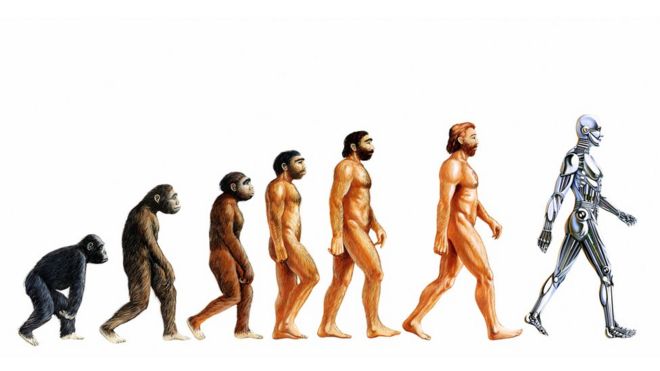
Being receptive to our own mental and intellectual states seem to be an overstated cliché, as per coaching and psychological practices. Yet, it is so often underrated in our routines and everyday life, because at all times we want to be "aware" of everything that happens at the time it happens. Our human brain is inherently limited by its inability to reach omniscience, so we must rely on accurate memorisation, observation, analysis, reflection and conclusion. This means that we must strictly, as best as we can, retain information as raw as possible, without the confusion of emotions, the bias of opinions and the perspective of past or future ambitions. Only then can our intuition birth ideas and concepts with a consistency and an integrity that will be effortlessly carried out in our lives.
"The answer, my friend, is blowing in the wind." Bob Dylan.
You would think that the more you move around, travel, discover, uncover, recover, the more experience you would have. Yet, it seems to work the other way round: the more you explore, the further you want to go, the more restless you become. It's like these travelers who have been to far reaching countries and are suddenly thrown back home. Except that the home is no longer there: the memories they had of it have been tainted and dispersed, blown in the wind. So, there is nothing left for them to yearn for in the past: they must look into the future.
Mind blowing
Movement and exploration are two simple manifestations of a single phenomenon: curiosity. Curiosity is what drives every person on this planet to step away from the comforting and familiar, to try, to fail, to walk into the heart of chaos in an attempt to find out what makes life what it is. If anything, it is like triggering a chemical reaction among the components of one's existence so as to isolate its core elements, its elementary particles. Outer travel is just another way to bring about the chemistry of the world to us.
But since nothing is gained and nothing is lost in such entreprise, what is the point of it? After all, we commonly yearn to obtain knowledge, skills, understanding, wisdom. We get an education, we get training, we get jobs, we get material possessions, we collect acquaintances, friends, partners, children, but none of this ever seems to be of any value in the end. We seem to have gained nothing but wasted our time and lost our way.
Fizzled out
This is because settling was never the real purpose in the first place. The point of a chemical reaction, just like alchemy, is to bring about a transformation: from ordinary to extraordinary, from dull to shiny, from stone to gold. Exploration is about transforming the mind, movement is about transforming the body. The places where you've been, the sights that you've seen, the people you have met serve no purpose but to reinvent yourself in this world. What we are along the timeline of our existence is nothing but a series of coincidental and self-engineered transformations.
What about those who have never travelled? Those who have lived in the same environments, in their societies, communities, families? What about those who shut themselves from the influences of the outer world and resist the perceived chaos of the universe? They would be disappointed to know that theirs is a very familiar pattern of the worldly chemistry. In fact, they are essential markers against which we measure the degree of change in us. Those friends who have remained when you left, upon seeing them, you cannot help but realise how much you have changed while you were away.
/https://public-media.smithsonianmag.com/filer/38/59/38591437-79ca-480a-bb46-c06ae575d38d/mars-curiosity-rover-msl-horizon-sky-self-portrait-pia19808-full.jpg "Watching and waiting")
It makes sense to accept that the order of our lives is nothing but streamlined chaos transformed by our own storytelling. There is no direction, no destiny, no fate, no determinism nor fatality: everything is chemistry. Yet it doesn't mean that we should stop believing in a mythology, a dreaming, a free-will or a spirit. In fact, the ultimate transformation that we can bring upon ourselves is to transcend our mind and body so as to unleash our imagination. Without imagination, there is no curiosity, without curiosity, there is no life. Curiosity is the essence of Humanity.